Letting Go, Handling Life

Acceptance does not weaken resolve. It sharpens it. When reality is acknowledged, decisions improve. Stress becomes manageable. Focus is restored. This inner strength allows individuals to respond with intention rather than react with fear.

As 2025 draws to a close, two words stand out with clarity: Letting Go. This is not a retreat from responsibility. It is a deliberate decision shaped by experience. In an environment marked by constant change, holding on to outdated expectations, fixed plans, and familiar comforts has become a liability rather than a strength.
In the real world, letting go is understood as a necessity. Strategies are revised. Structures are streamlined. Leaders move forward by releasing what no longer serves the organization. The same principle applies beyond the workplace. Personal growth now demands the same discipline and maturity.
Looking ahead to 2026, four words define the mindset required: I can handle this. These words reflect readiness, not ease. They acknowledge pressure while affirming capacity. They speak to resilience built over time, not confidence borrowed from circumstances.
This perspective is closely tied to spirituality, a concept often misunderstood. Spirituality is not about religion. It is about accepting reality as it exists. It is about strengthening the inner self so that challenges can be faced with clarity and balance.
In today’s demanding landscape, the most effective professionals are not those who attempt to control everything. They are those who manage themselves well. They let go of what drains energy and commit to what builds capacity.
“I can handle this” is not a declaration of perfection. It is a steady assurance grounded in preparation, self-awareness, and perspective. It reflects leadership that is calm, measured, and dependable.
As the years turn, letting go may be the discipline that defines 2025. Handling what comes may be the posture that carries us through 2026. Together, they point to a quiet strength that remains essential in both business and life.
So, I just have two words for 2025 – Letting go. And for 2026 the four words I can utter is “I can handle this.
Spirituality is about accepting realities. It is not just about religion. It is about strengthening our inner self so that we can handle everything that is in front of us.

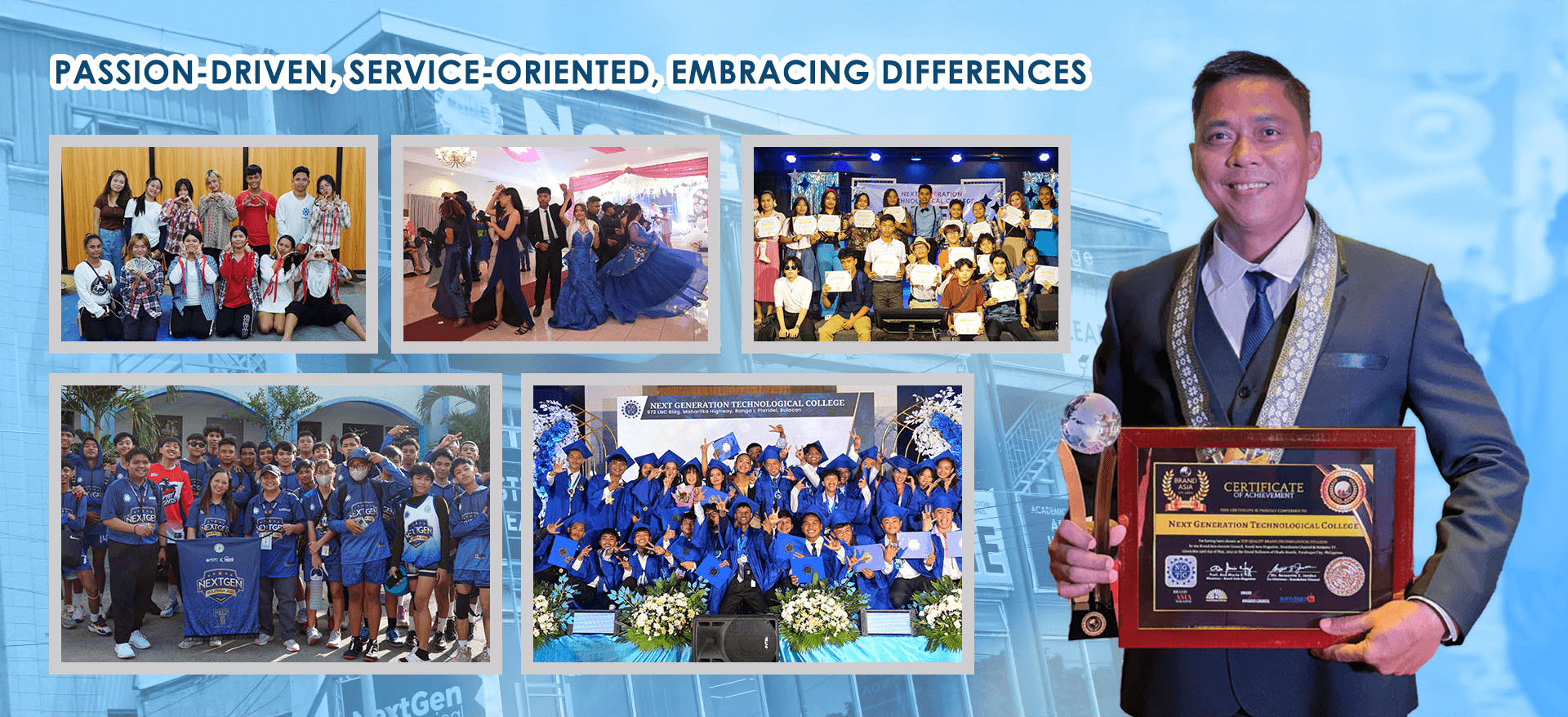
NEXT GENERATION TECHNOLOGICAL COLLEGE’S ENHANCED DEVELOPMENT PROGRAM: A STRATEGIC PATHWAY TO SKILLS, STABILITY,AND LOCAL OPPORTUNITY

Sources used in this article include TESDA employment

and graduation statistics, national policy documents,

and government surveys from official TESDA releases

and Philippine Information Agency reporting

In a rapidly evolving labor market where traditional college degrees no longer guarantee employment and the specter of brain drain continues to erode local talent, Next Generation Technological College (NGTC) is set to unveil its Enhanced Development Program (EDP)— a comprehensive educational model that integrates technical skills, industry credentials, enterprise training, and career pathways to equip learners from kindergarten to career transition with work‑ready competencies and entrepreneurial adaptability

A National Imperative: Skills, Jobs, and Futures

Statistics from the Technical Education and Skills Development Authority (TESDA) illustrate why such reform is urgent and strategic. In 2024, nearly 1.4 million Filipinos graduated from TESDA‑accredited courses, with over 1.2 million applying for competency assessment and approximately 872,000 achieving certification as skilled workers—an assessment rate of more than 90% among applicants. Statistics from the Technical Education and Skills Development Authority (TESDA) illustrate why such reform is urgent and strategic.
In 2024, nearly 1.4 million Filipinos graduated from
TESDA‑accredited courses, with over 1.2 million applying for competency assessment and approximately 872,000 achieving certification as skilled workers—an assessment rate of more than 90% among applicants. More critically, data from TESDA’s 2024 Study on Employment of TVET Graduates (SETG) revealed that 83.34% of technical‑vocational (tech‑voc) graduates secured employment after training, upfrom 79% the previous cycle. This figure climbed even higher in key regions such as Central Luzon, posting a 90.07% employment rate—a testamentto the resonance between skills training and industry demand.